 Red
Red
 Red
Red
 Red
Red

Diving Heron Island
Heron Island is one of the few places on the Great Barrier Reef where you can actually stay right on the reef. The small coral cay is located about 70 km off the coast of Gladstone and lies directly on the Tropic of Capricorn.
The Heron Island Resort offers accommodation ranging from simple rooms to more comfortable, luxurious options. For current information about accommodation, facilities, and diving, see the official Heron Island website, which also provides a map of the dive sites.
The island's dive operator offers three boat trips per day, two in the morning and one in the afternoon. The dive sites are only a few minutes away by small open dive boat, so you spend very little time travelling. During my visits, the boats were pleasantly uncrowded, with an average of only three to five divers per trip, and the crew was friendly and helpful.
Most of the dive sites are relatively shallow, with maximum depths generally below 20 metres. Depending on the tides, however, currents can be strong and conditions can change considerably between dives. Visibility averages around 10–20 metres, although it can be better or worse depending on weather and tidal conditions.
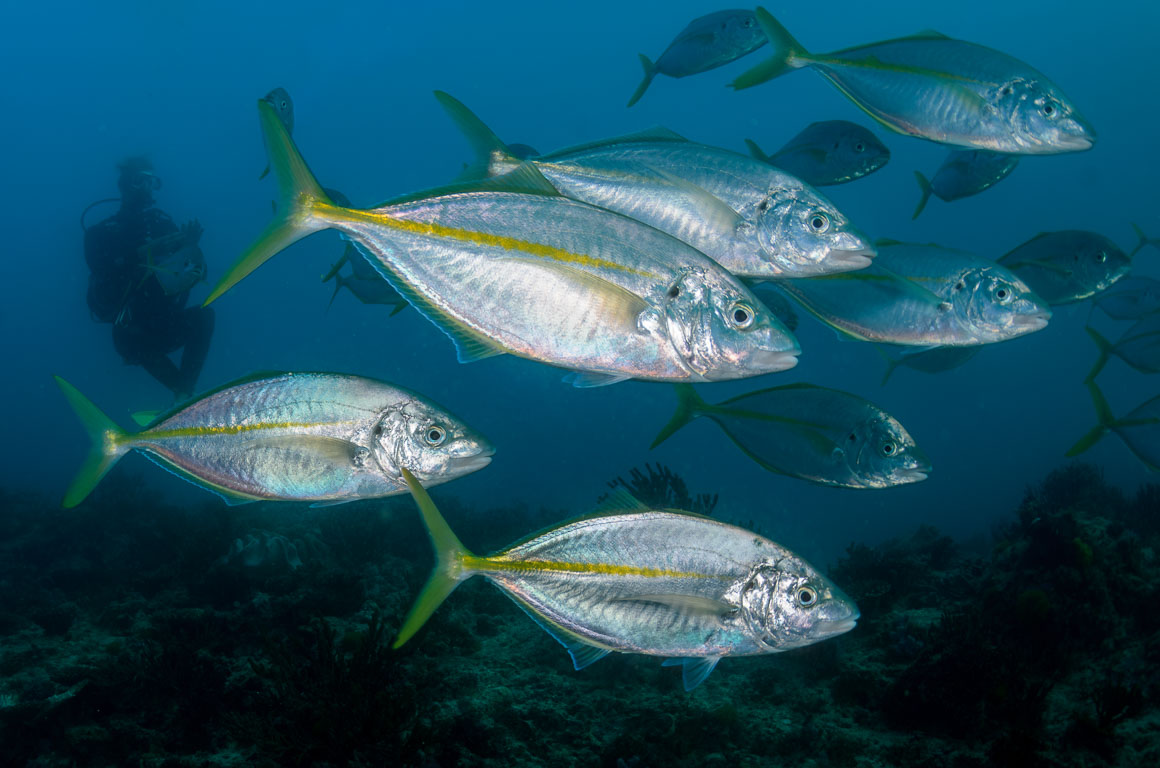
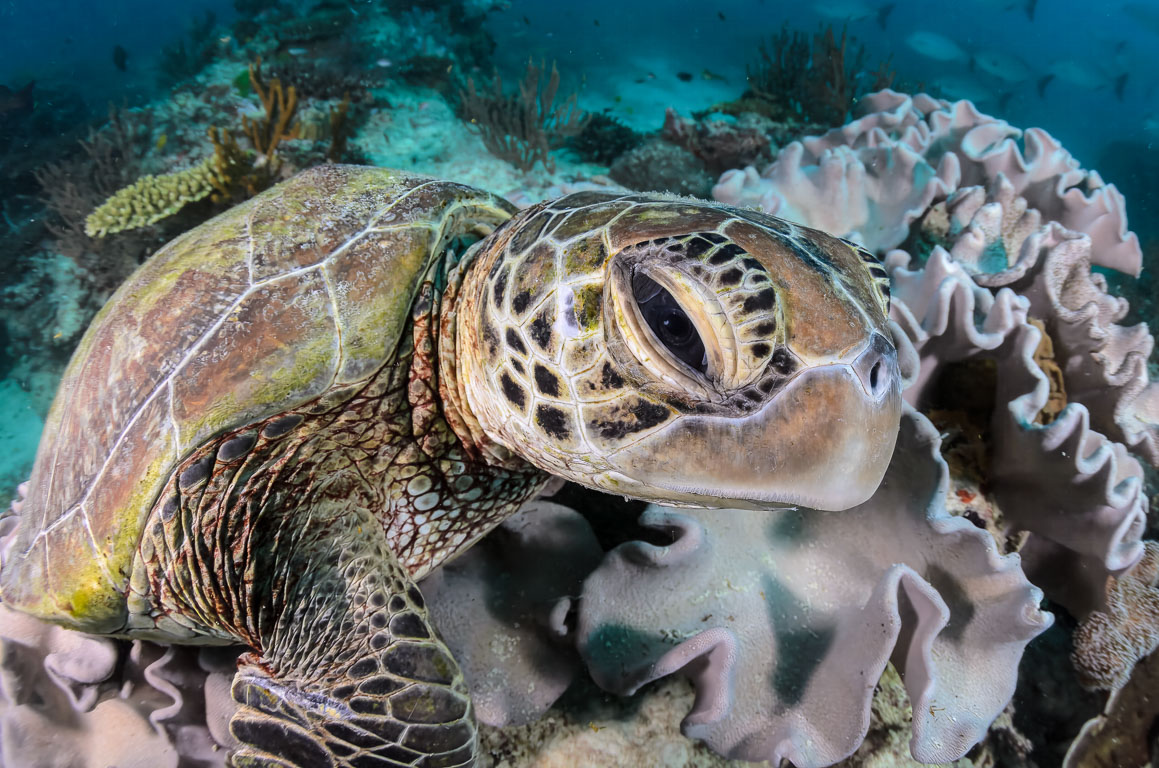
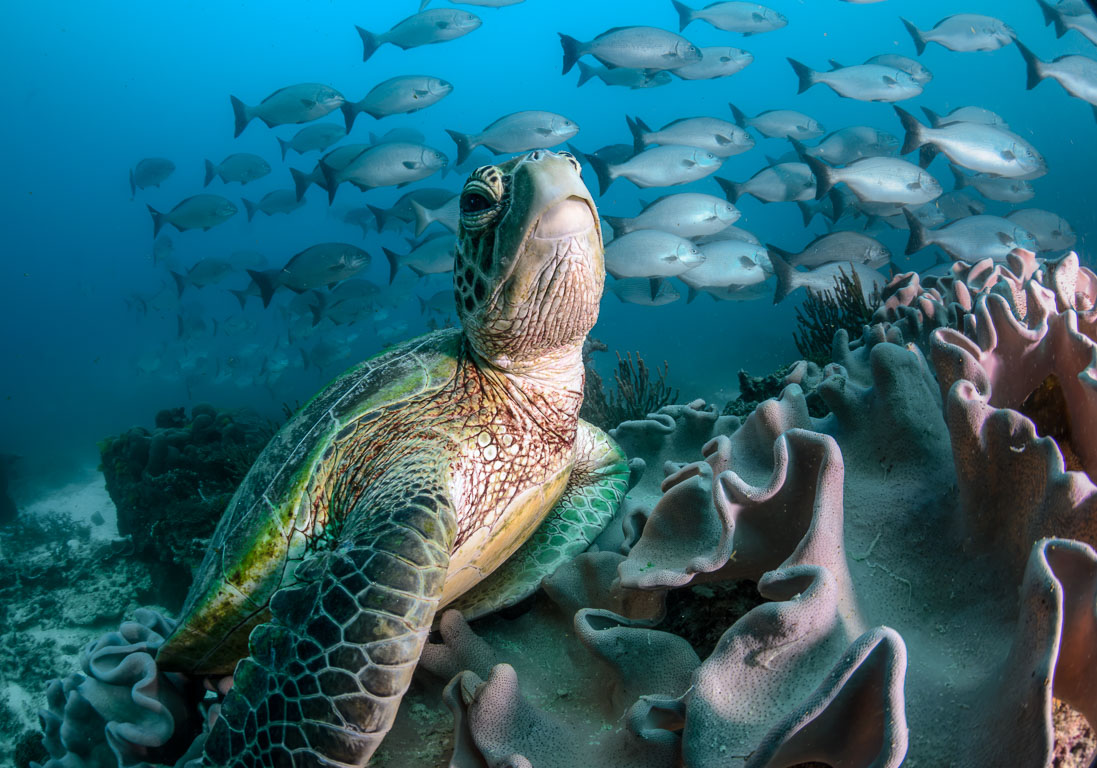
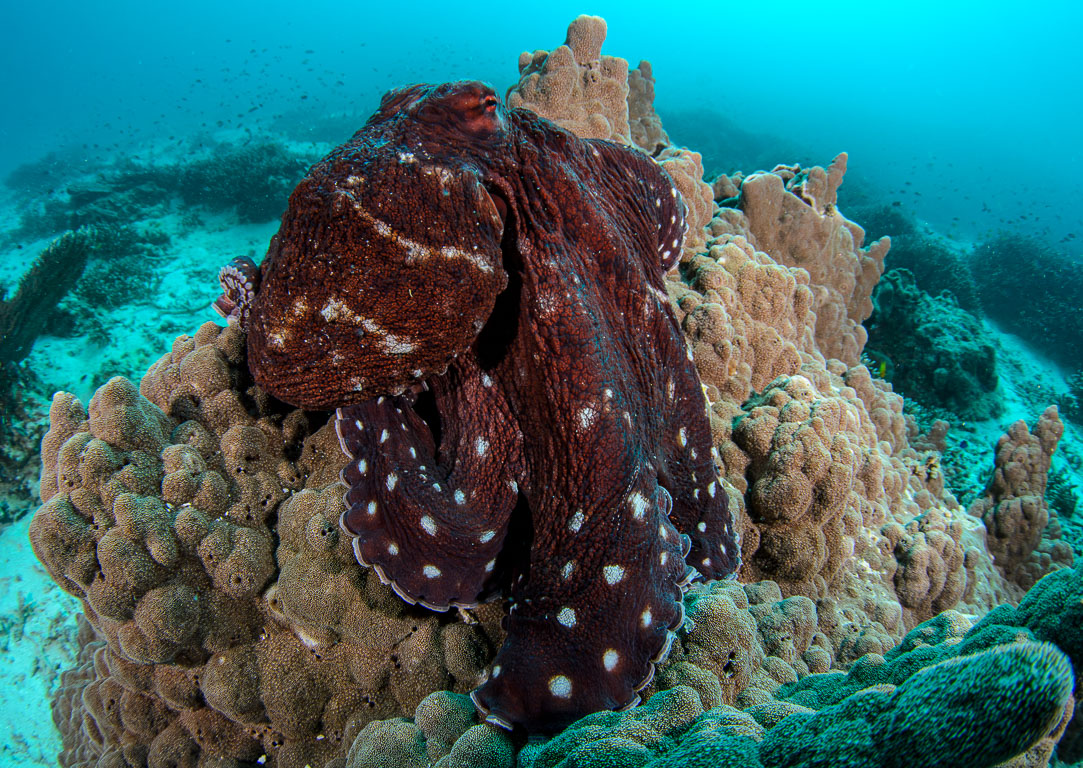
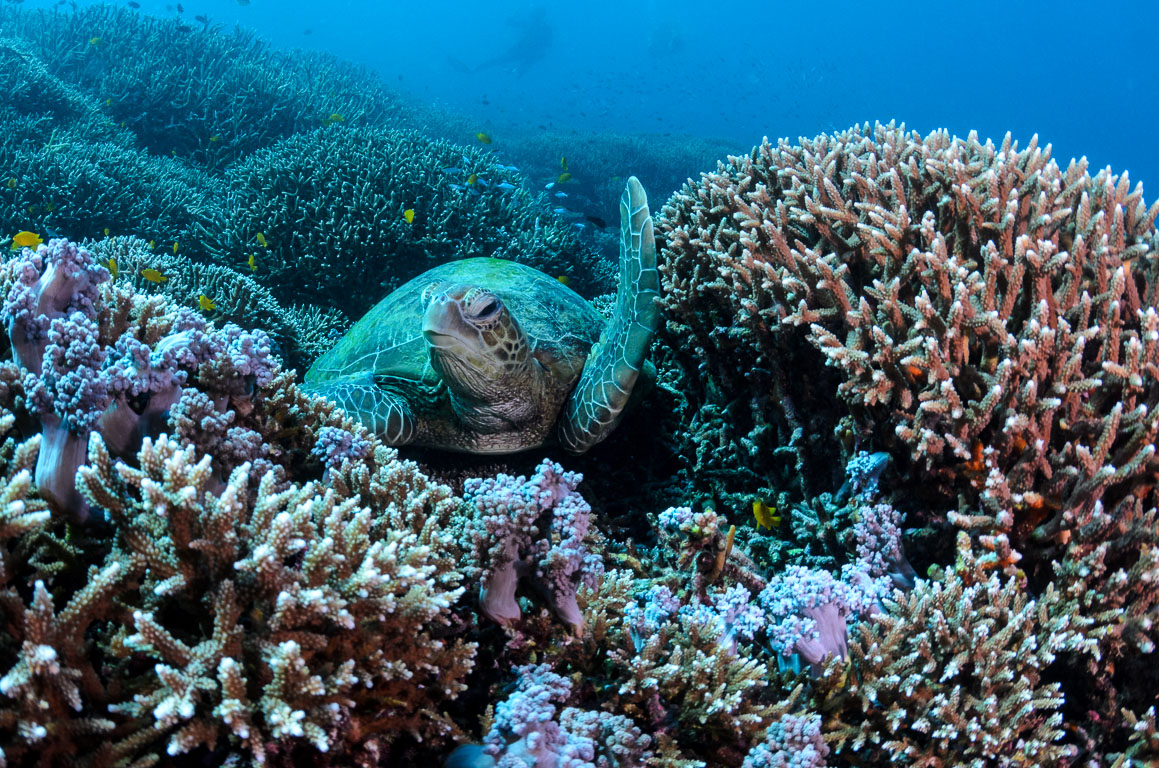
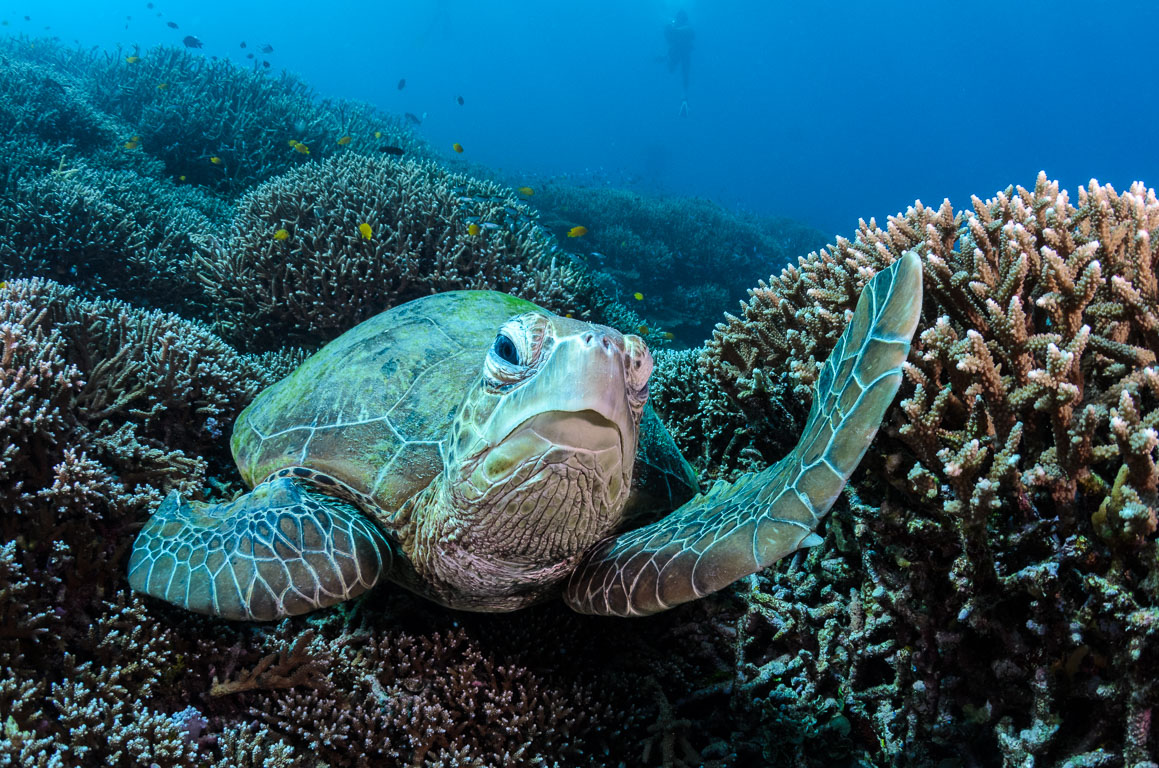
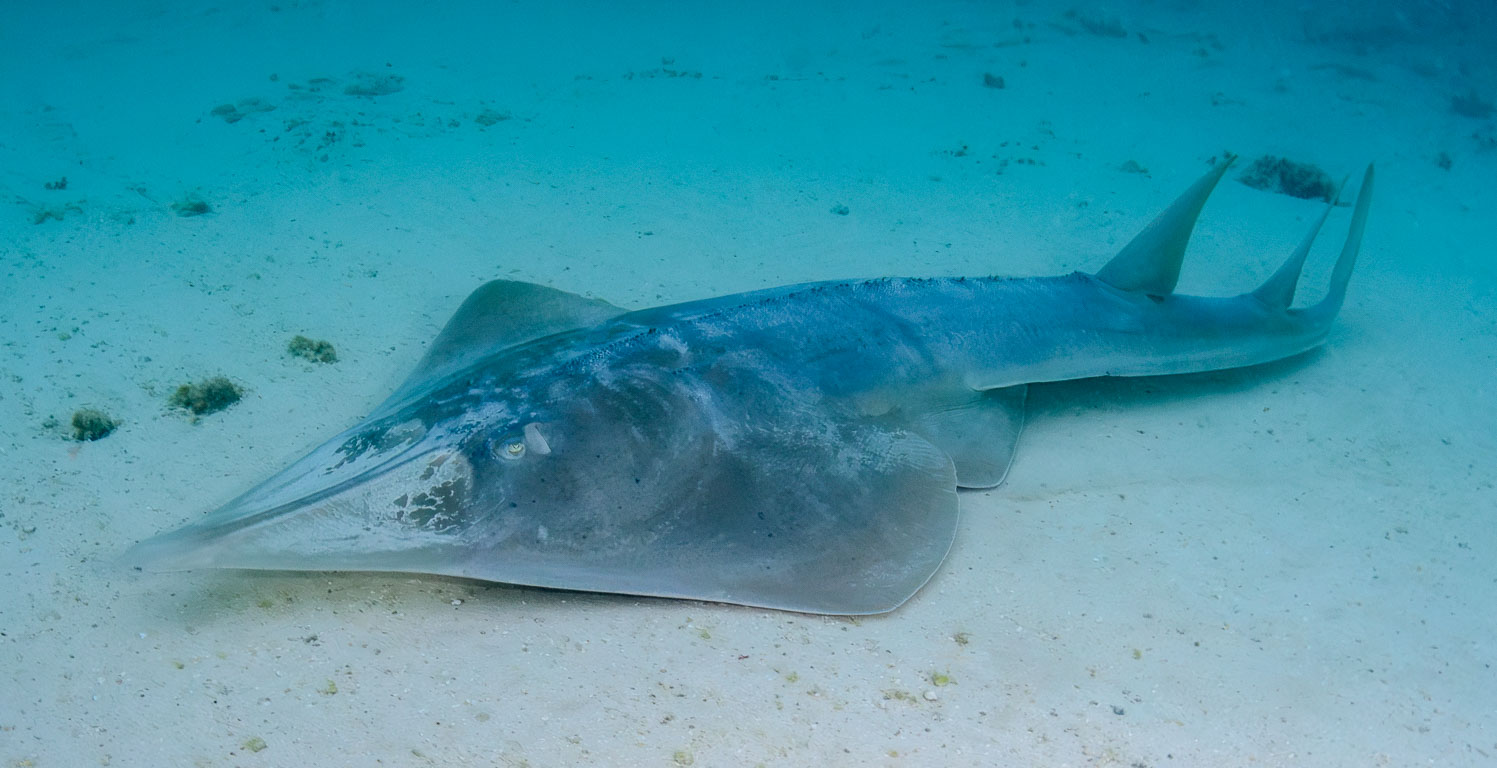
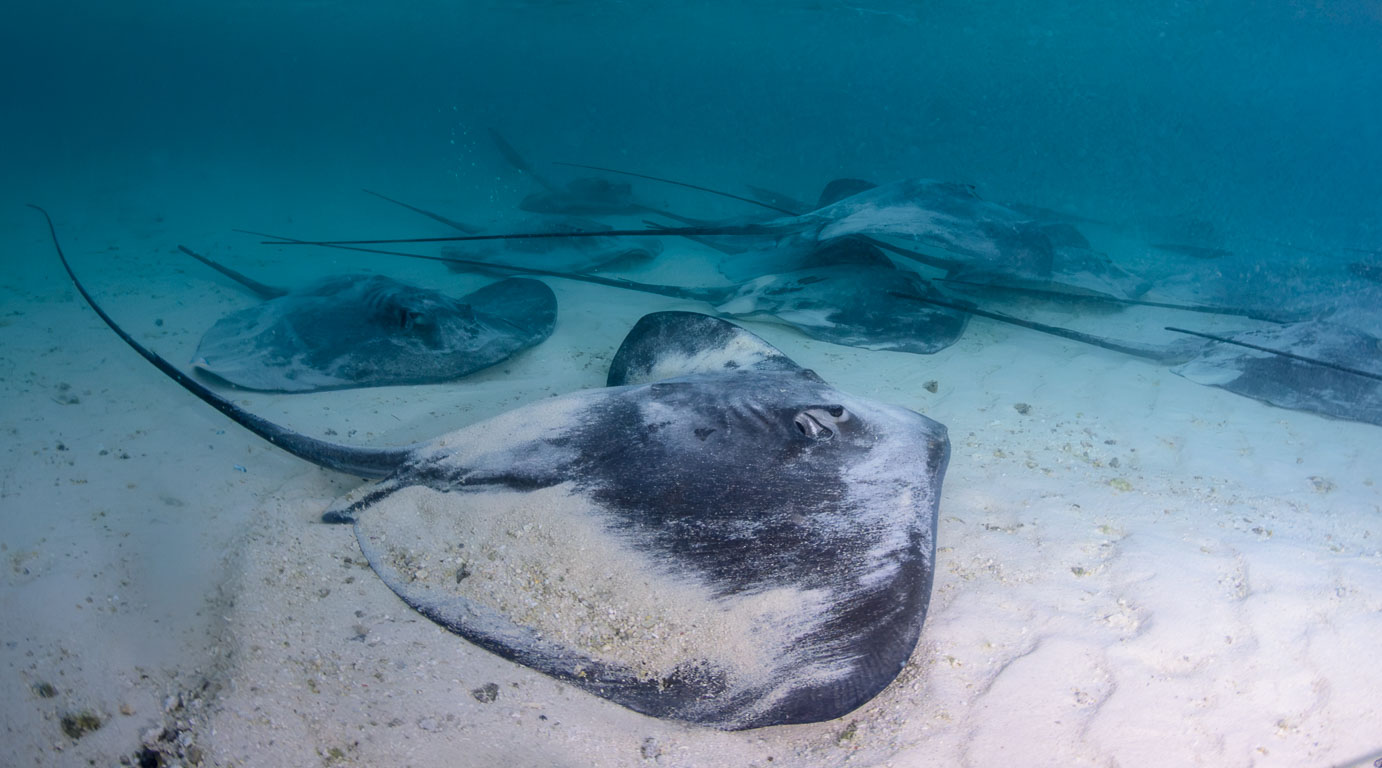
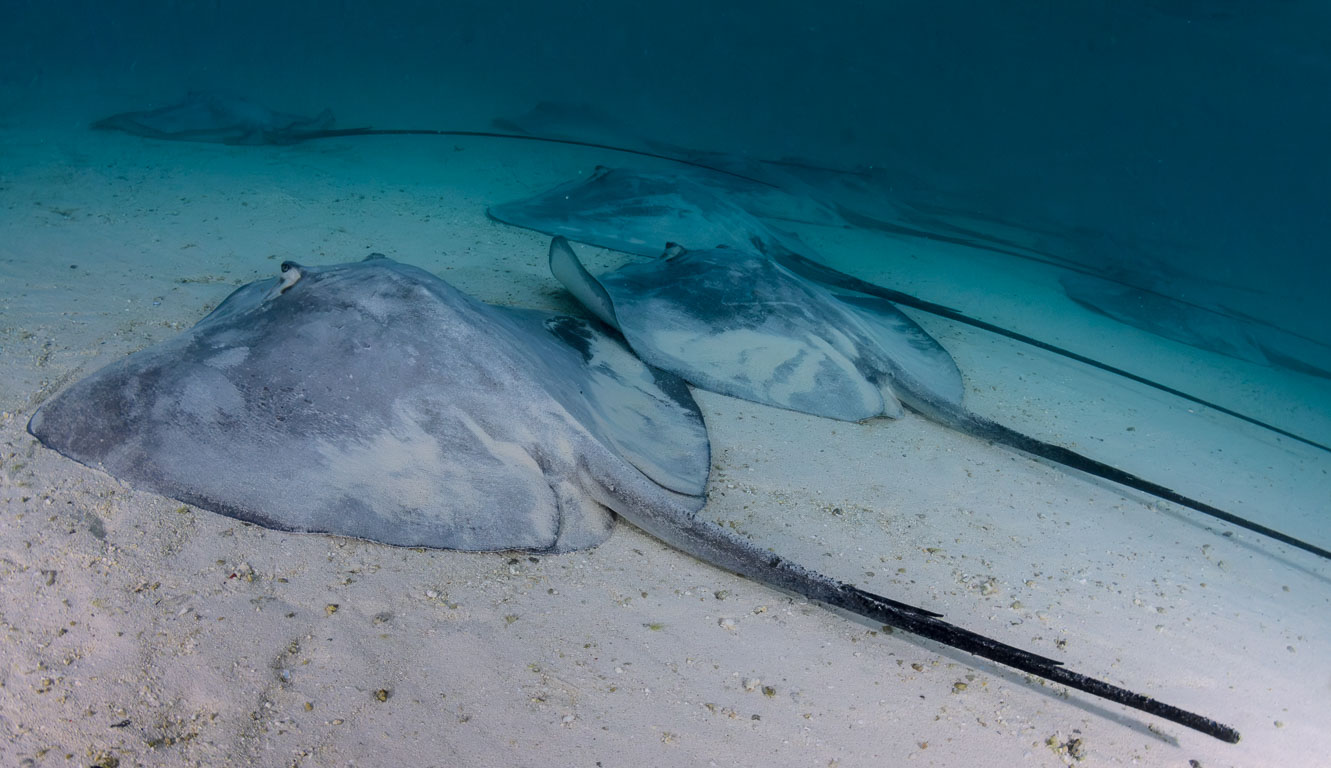
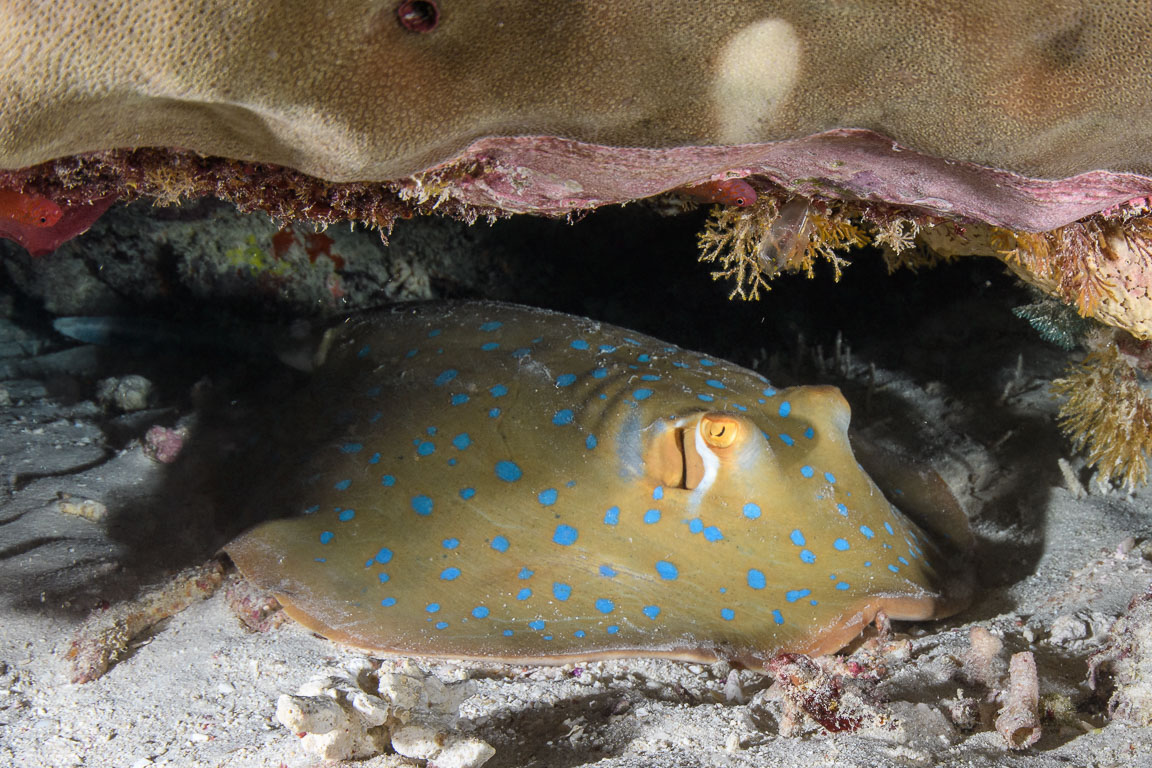
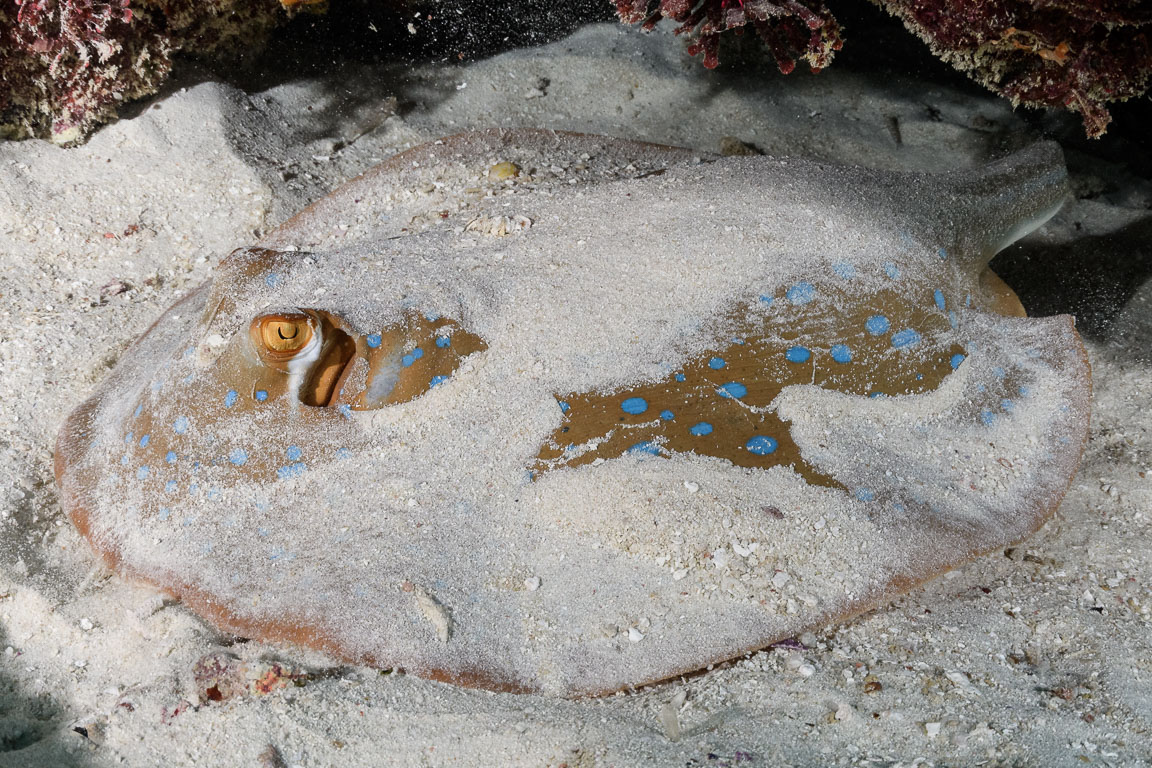
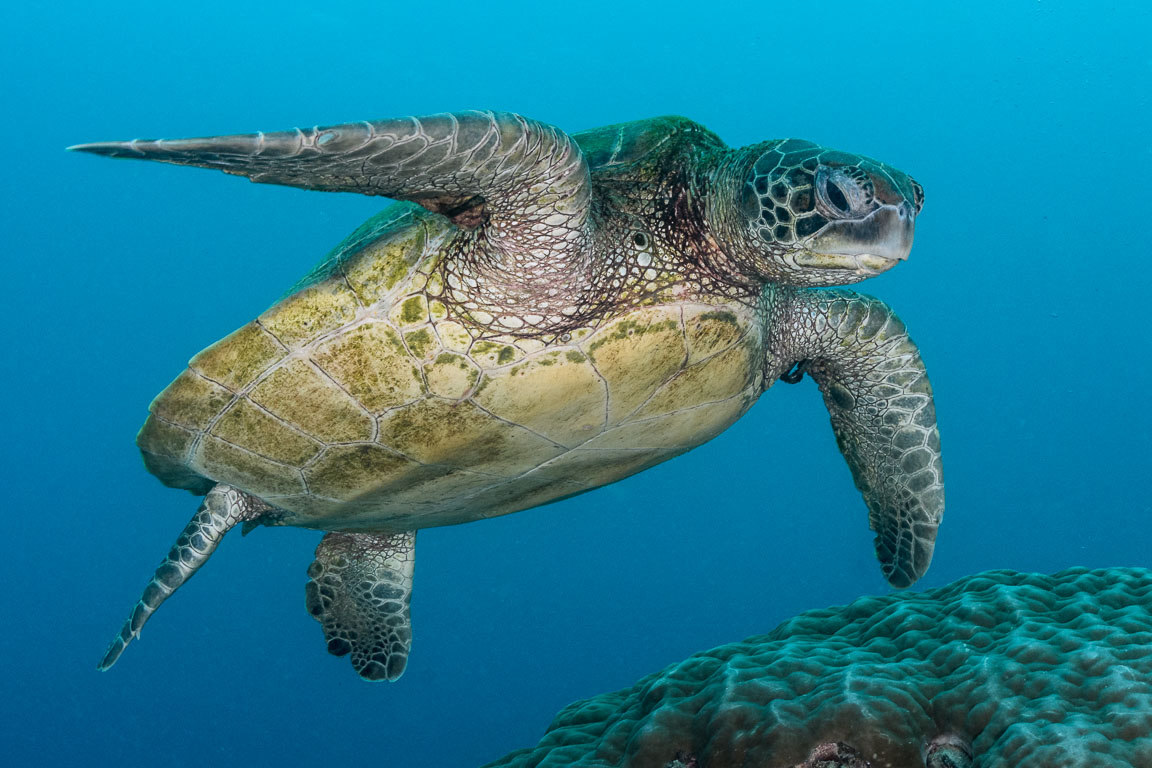
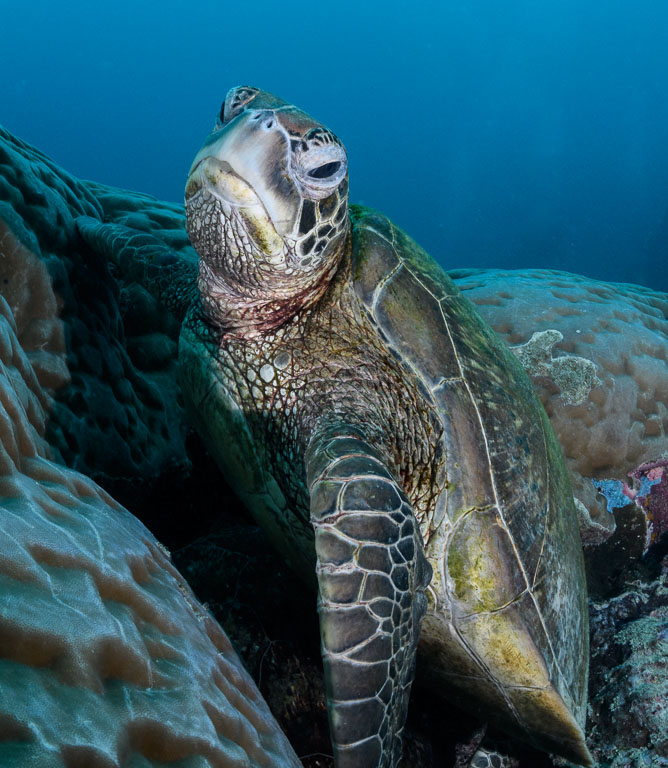
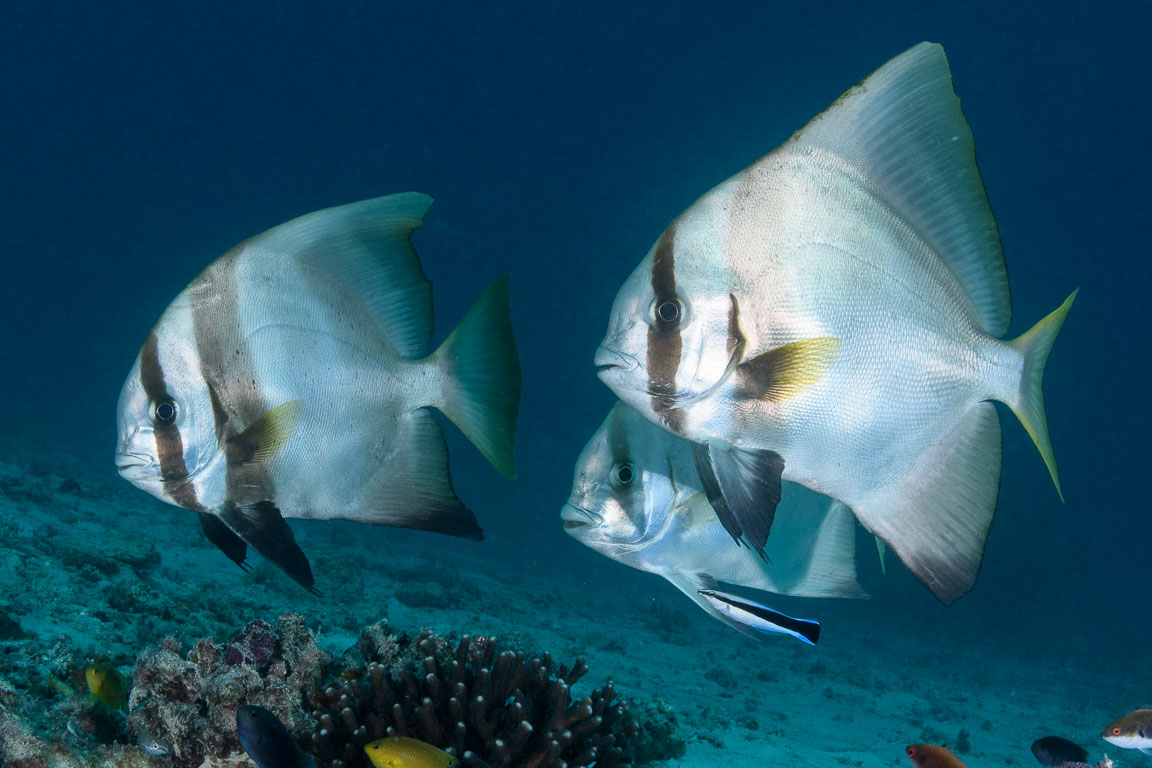
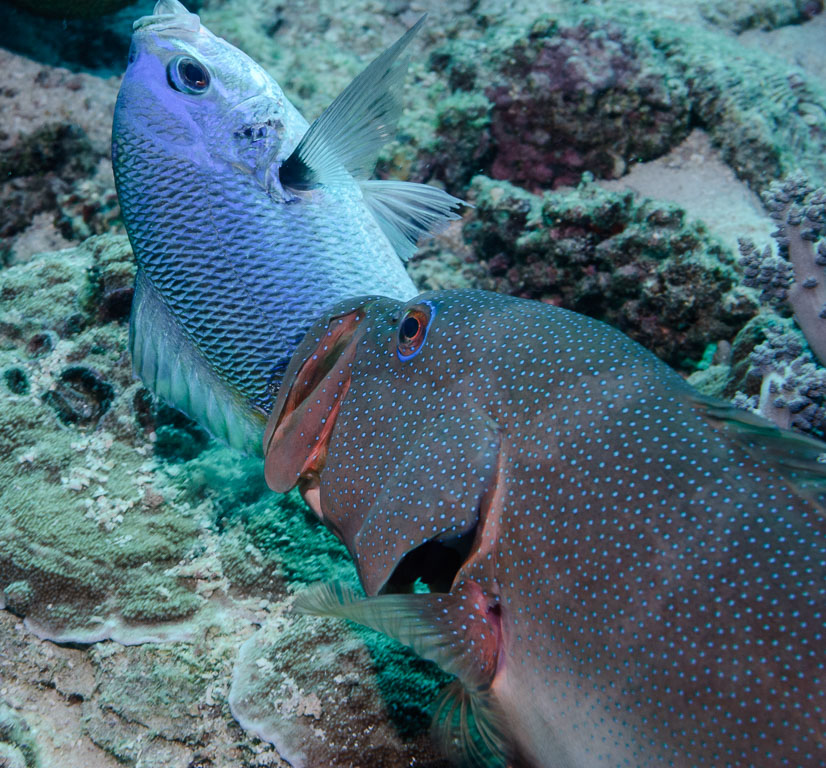
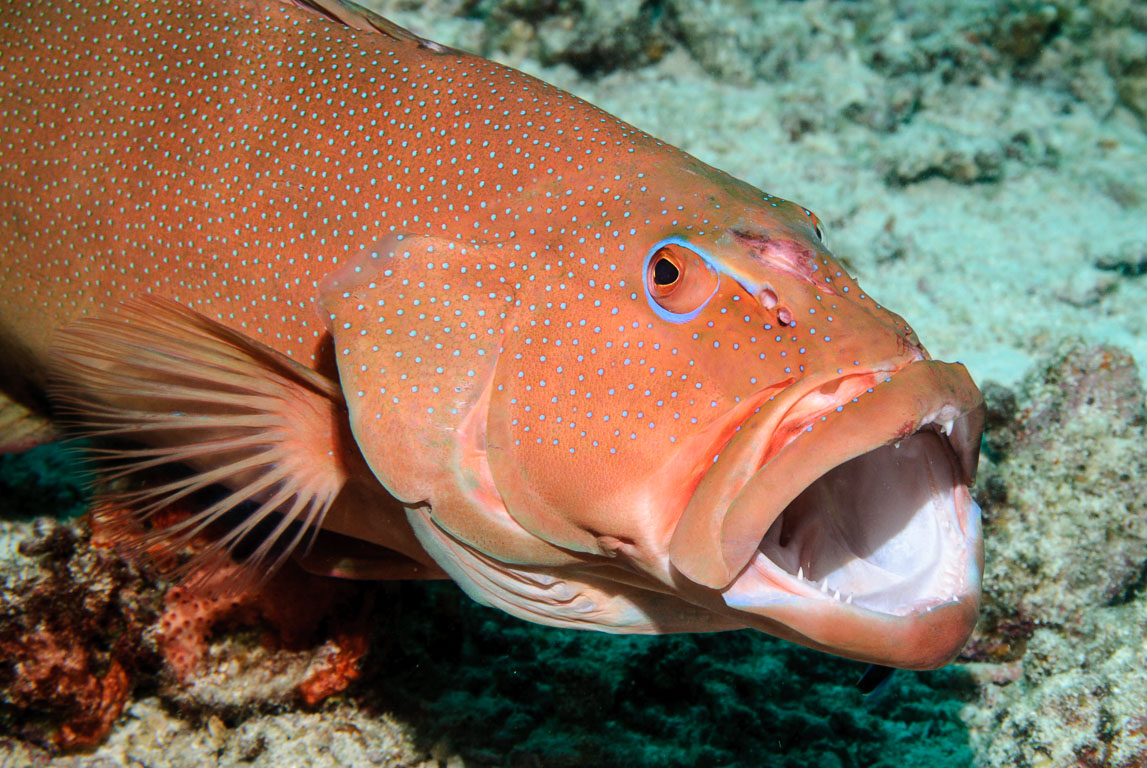
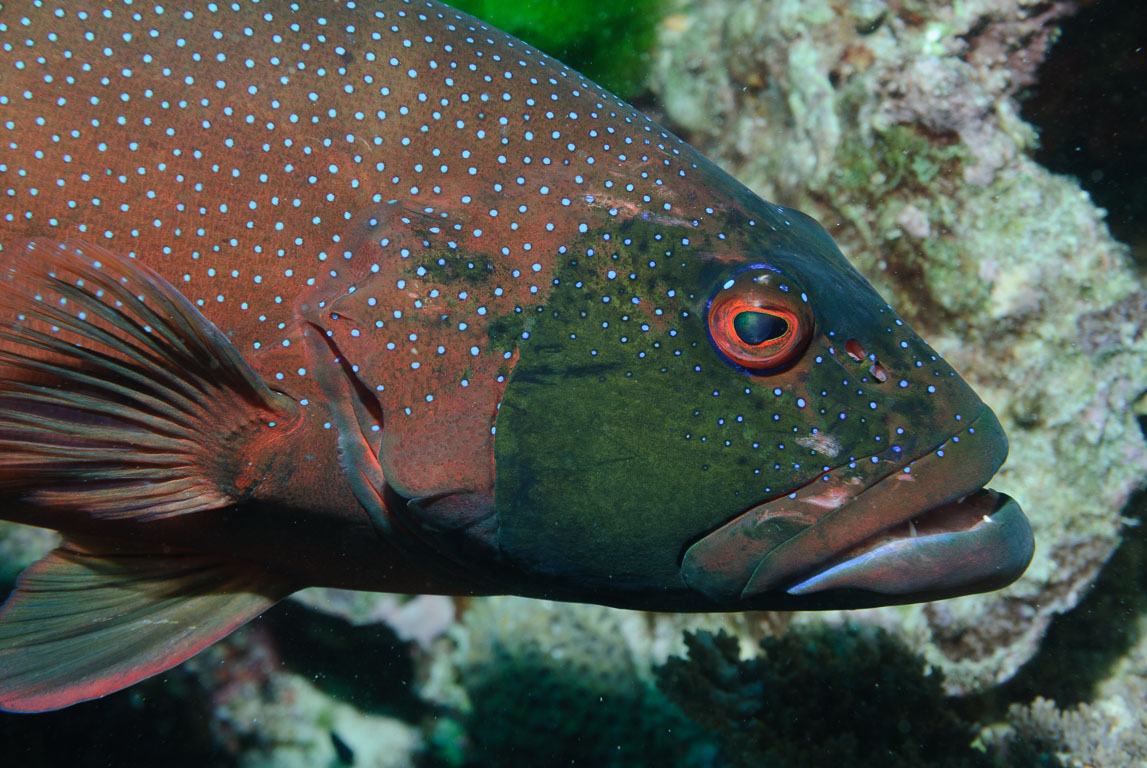
The marine life is one of the main attractions of diving around Heron Island. Green sea turtles are particularly abundant and can frequently be seen resting on the reef or swimming between the coral formations. Large Queensland groupers are another characteristic sight, often found close to the reef or around overhangs. Depending on the season and conditions, manta rays and reef sharks can also be encountered.
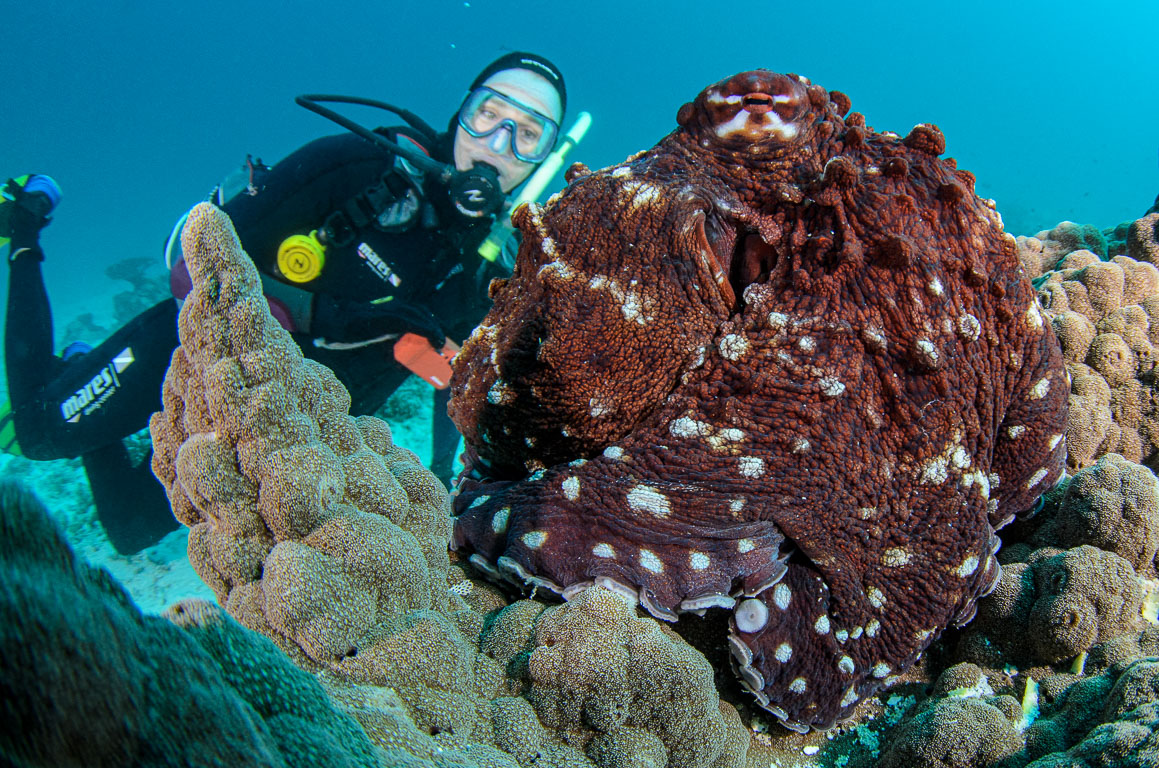
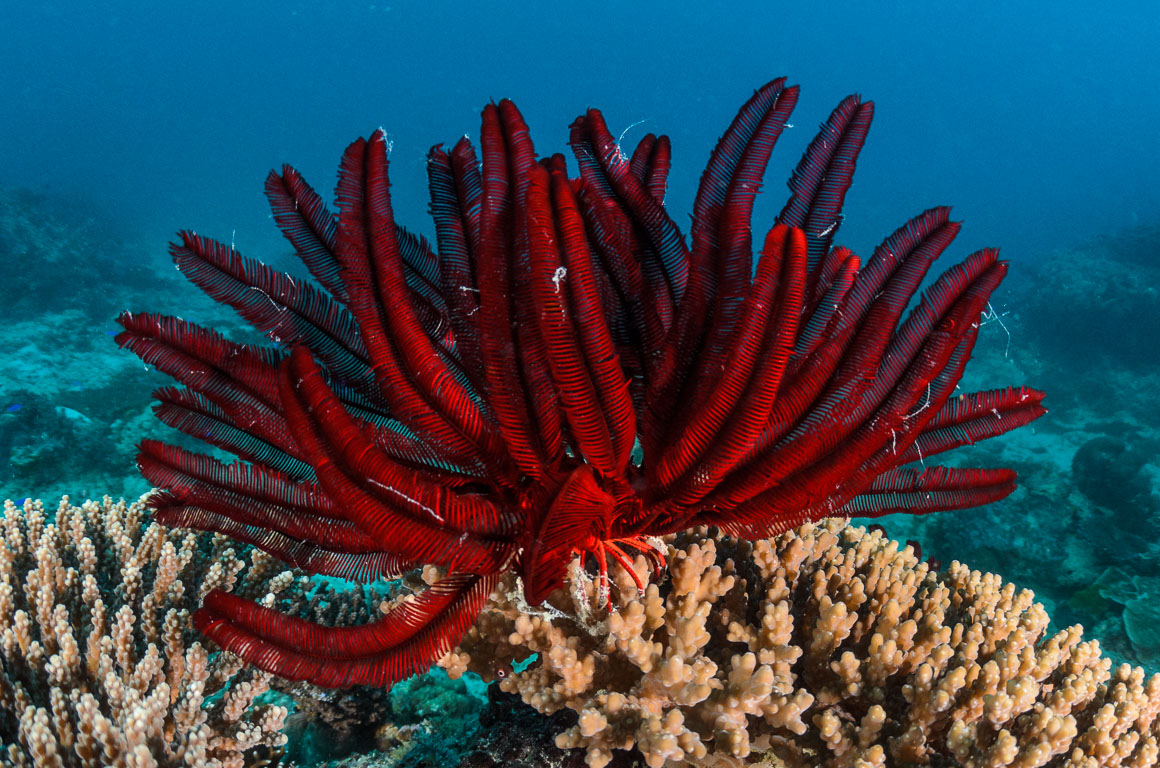
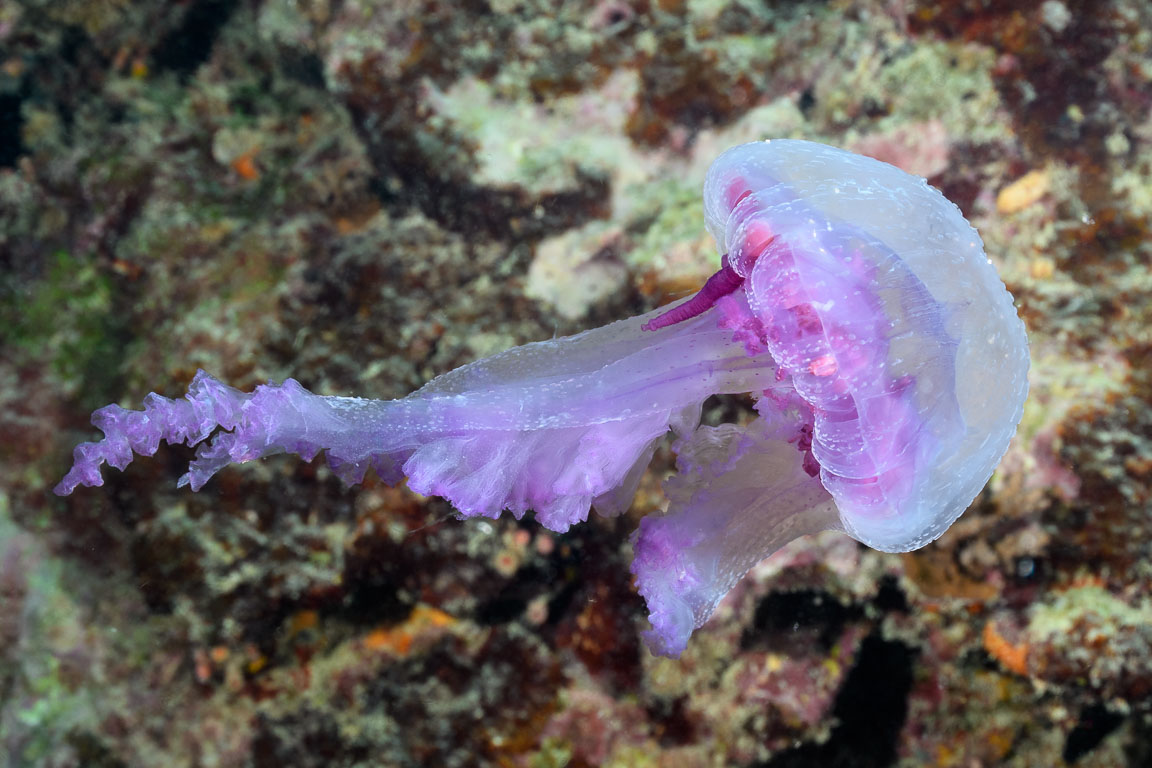
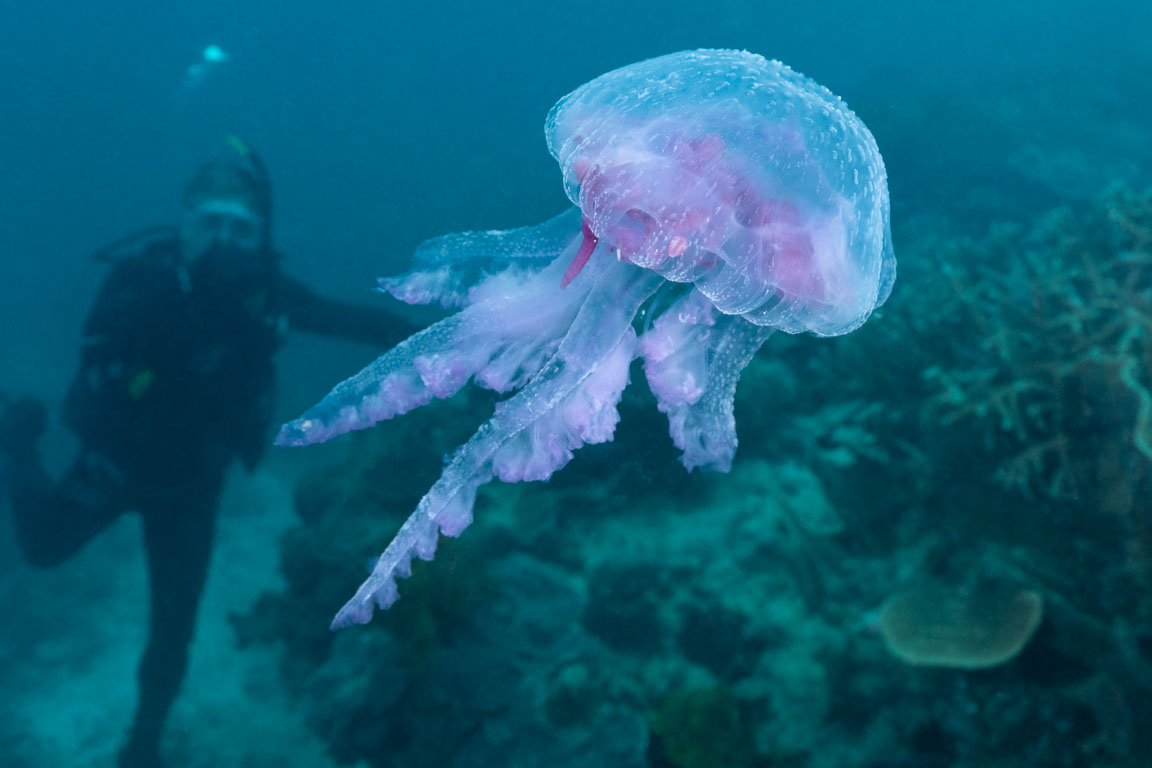
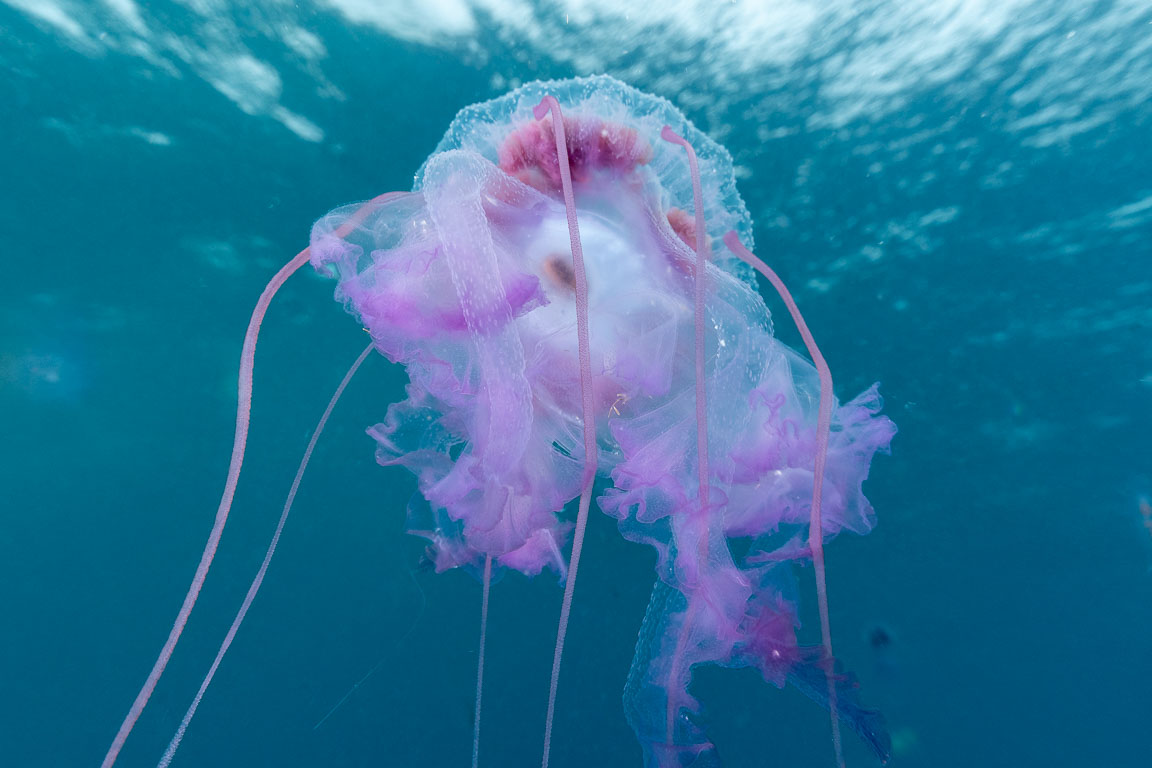
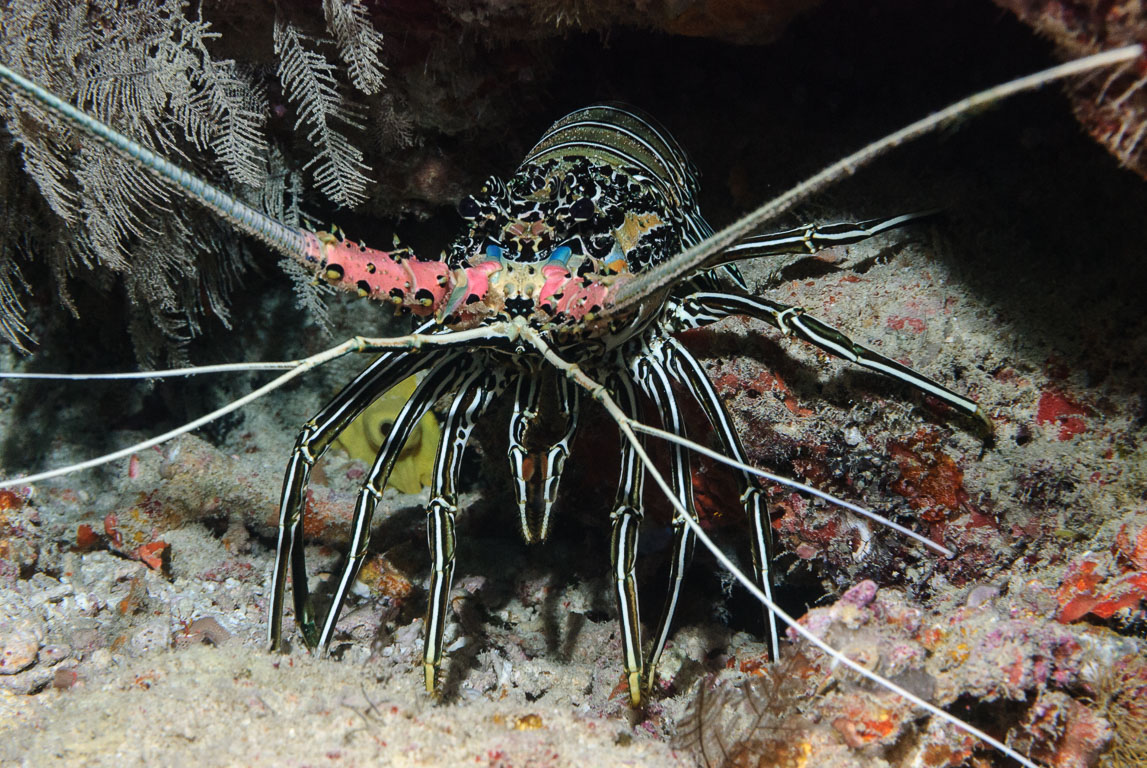
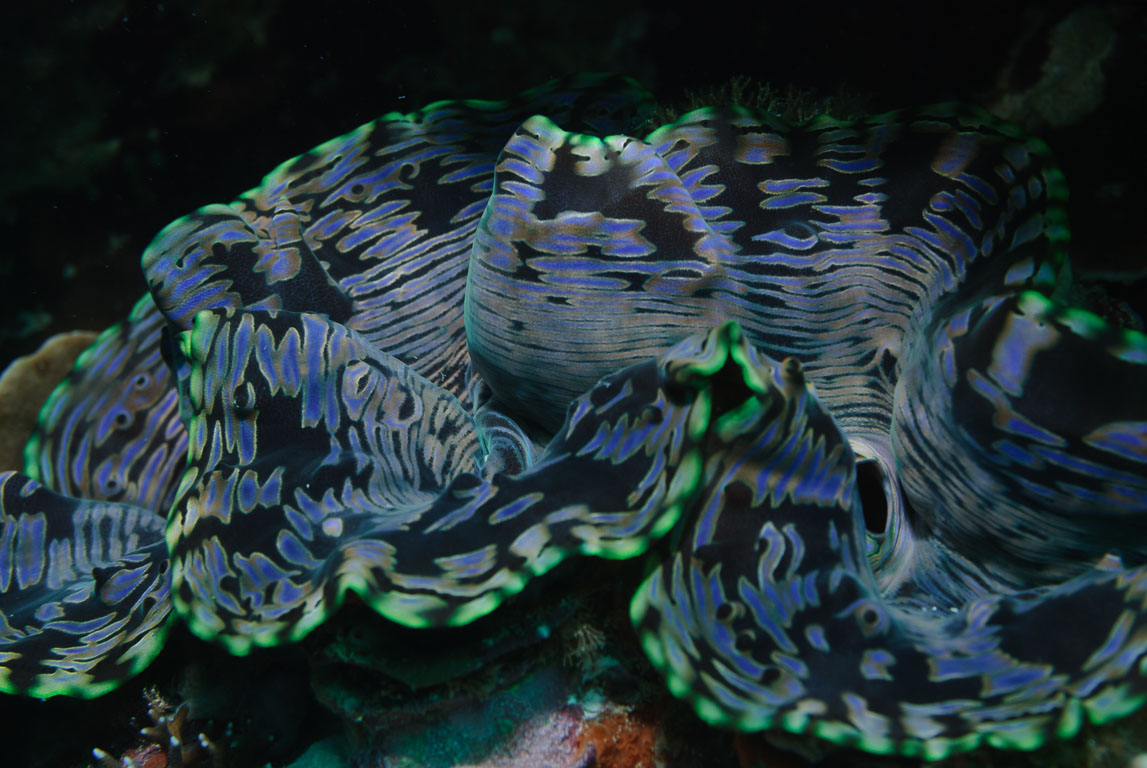
The shallow coral reefs support extensive patches of hard corals and a remarkable diversity of smaller reef organisms. For an attentive diver, the reef is also an excellent place to look for nudibranchs and other small invertebrates. These are easy to overlook when concentrating on turtles, rays, and large fish, but the diversity of small animals makes many of the shallower dives particularly interesting for underwater photographers.
I visited Heron Island several times in July, during the Australian winter. The water temperature was around 21°C, and the air could be surprisingly chilly, particularly in the mornings and after the dives. For comfortable diving at this time of year, I would recommend a 5 mm or 7 mm wetsuit with a hood.
The combination of staying directly on the Great Barrier Reef, short boat rides, relatively shallow dive sites, and generally small groups makes Heron Island a convenient base for exploring this part of the reef. The variety of marine life also means that the same dive site can look quite different from one dive to the next, depending on the tide, conditions, and what happens to be passing by.